
It never fails to amaze me how a truly remarkable story can lie hidden deep in the branches of your family tree. One that particularly stands out for me dates back to the golden age of exploration in the early 1930s.
I discovered a connection to Sir Robert Alan Clayton East-Clayton, the 9th Baronet of Clayton East of Hall Place, Berkshire. He was the great-great-grandson of Sebastian Smith and his wife Jane Elizabeth Willmott. Jane was the niece of my 3rd great-grandfather Edward Willmott, which makes Sir Robert my fifth cousin once removed.
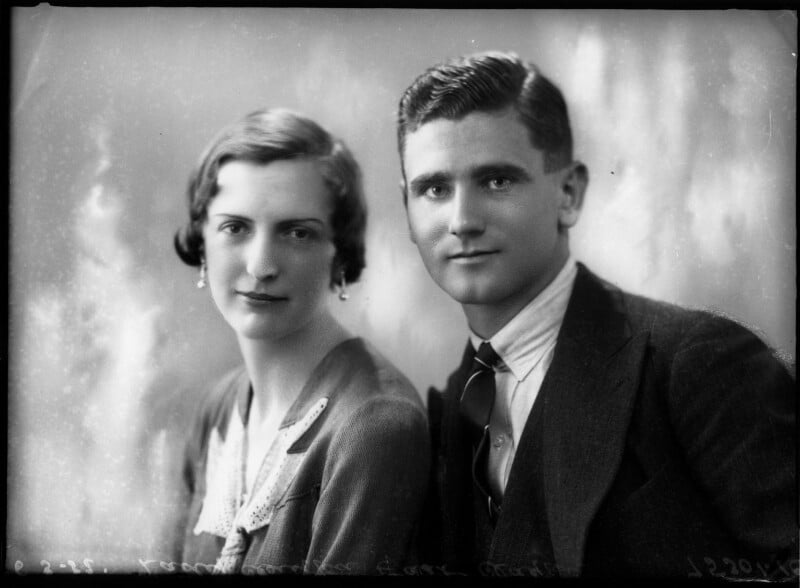
Born in 1908 in Brompton, West London, Robert married Dorothy Mary Durrant in February 1932. Dorothy, the daughter of the Rev. Arthur Durrant, vicar of Leverstock Green near Hemel Hempstead, met her future husband on a sea voyage, and they wed shortly afterwards.
Robert had succeeded to the baronetcy in 1926 following his father’s death. A serving officer in the Royal Navy (reaching the rank of Lieutenant), he took six months’ half-pay leave around the time of his wedding to join an ambitious expedition. Together with the Hungarian explorer and cartographer Count László Almásy, he set out to map the largely unexplored desert along the Egyptian-Libyan border—and to search for the fabled Lost Oasis of Zerzura.
Zerzura had first been described by the pioneering English Egyptologist Sir John Gardner Wilkinson in the 1830s. Ancient Arabic manuscripts spoke of a white-walled desert citadel hiding untold riches, and by the 1930s it had become something of a holy grail for a daring circle of Saharan explorers. The group even had their own annual gathering—the Zerzura Club—which met at London’s Café Royal.
If you’ve seen the film The English Patient, you’ll recognise Almásy’s name. Michael Ondaatje’s novel (and the movie) drew loose inspiration from the real 1932 expedition. In the film, the characters Geoffrey and Katharine Clifton (played by Colin Firth and Kristin Scott Thomas) are thinly veiled versions of Robert and Dorothy. Even the aircraft detail echoes reality: Robert flew a Gipsy Moth he named Rupert (after the cartoon bear). However, the film takes significant liberties—most notably inventing a passionate affair between Almásy and Katharine, and dramatising fatal accidents that never occurred during the actual journey. The real events took place several years before the wartime setting of the story.
Flying low over the remote Gilf Kebir plateau, the expedition party—including Robert piloting Rupert—spotted vegetated wadis hidden within the rocky massif. They believed they had found the lost oasis, though they discovered little evidence of an ancient citadel. Low on fuel and supplies, they returned with plans to mount a follow-up expedition.
Tragically, Robert contracted a mysterious illness during the trip. He died in England in September 1932, aged just 24.
Undaunted, Dorothy—herself an accomplished pilot and sculptor—resolved to finish her husband’s work. In 1933 she flew her own light aircraft solo to Egypt and joined another expedition to the Libyan Desert. On her return, however, tragedy struck again. At Brooklands airfield in Surrey, the throttle of her plane jammed open on take-off. Travelling at around 50 mph, she attempted to jump clear but suffered fatal injuries.
It’s a captivating tale of adventure, courage, and the romance of discovery—yet one that ended far too soon for this remarkable young couple.
Acknowledgements & References:
- The portrait of Sir Robert and Lady Dorothy is the copyright of the National Portrait Gallery who kindly gave permission to include here under a creative common licence.
- Zerzura, Count Almasy and the English Patient, https://wilderness-ventures-egypt.com/zarzora-almasy-and-the-english-patient/
- Lady Dorothy Clayton-East, http://www.lgchronicle.net/DDurrant.html
- The Hunt for Zerzura, The Lost Oasis of the Desert War, Saul Kelly, Johnson Murray (Publishers) Ltd, ISBN 0-7195-6162 0